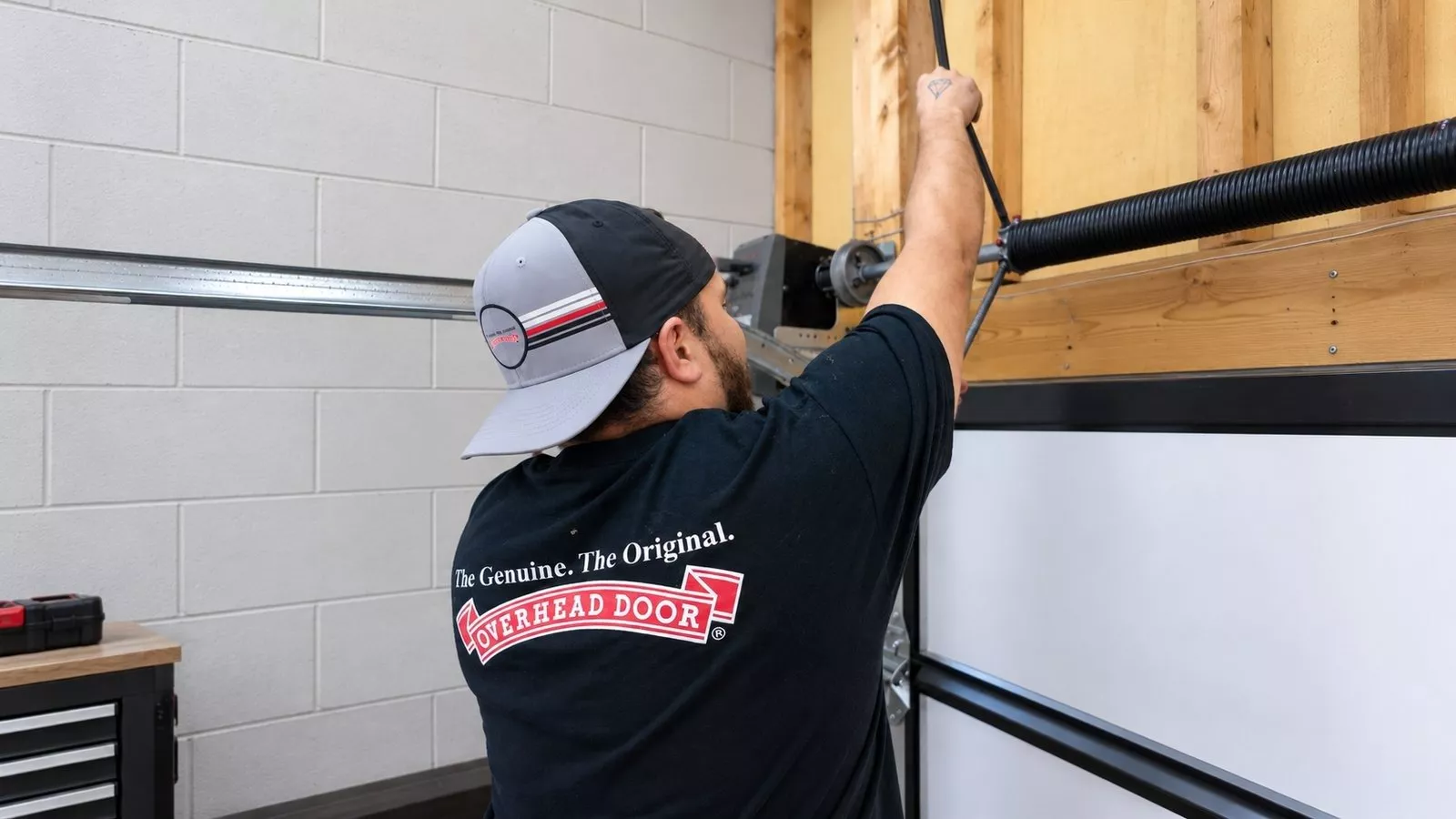
Although the Permian Basin’s high desert climate doesn’t bring freeze-thaw cycles or lake- effect snow like the Midwest — it still brings extreme heat, blowing dust, and a level of industrial vehicle traffic that few other residential markets deal with. Around Midland and the surrounding basin, garage door hardware faces a different but equally demanding set of stresses.
Intense, near-constant UV exposure degrades nylon rollers, weatherstripping, and plastic hardware components faster than in cloudier climates. Blowing dust and fine sand common across the basin work their way into roller bearings and track channels, accelerating wear through abrasion rather than corrosion. Wide day-to-night temperature swings typical of high desert climates cause steel components to expand and contract daily, adding a thermal cycling stress most homeowners don’t associate with a hot, dry region. Heavy oilfield-related vehicle traffic in many neighborhoods also means additional grit gets tracked into garages regularly.
Texas doesn’t require a specialty state license for overhead door technicians. Look for **IDA membership**, manufacturer certification (Clopay, LiftMaster, Amarr), and verified liability insurance. Ask directly: “What’s the IPPT (inch-pounds per turn) for a 160-pound door on a standard torsion spring?” A trained technician answers without hesitation.
A legitimate quote specifies wire diameter, inside diameter, and spring length — never just “replace spring.” Given the dust and grit exposure common here, ask specifically whether sealed-bearing rollers are being used, since standard nylon rollers wear faster in this environment.
If your opener predates 1993, replace it regardless of door condition — it most likely lacks the required safety sensors to prevent accidental injuries. On an older door, if repair costs exceed half of replacement value, replacement is usually the more practical long-term choice, particularly if UV and dust exposure have already degraded rollers and seals significantly.
Because blowing dust and intense UV — not cold or humidity — are the primary stress factors here, a maintenance routine in the Permian Basin looks different from most national guides. Wipe down visible grit from track channels regularly rather than lubricating over it, since lubricant combined with fine sand becomes an abrasive paste that accelerates roller wear. Inspect nylon rollers for brittleness and hairline cracking caused by sustained UV exposure — a cracked roller often precedes a noisy, binding door by months in this climate. Lubricate spring coils, hinge pivots, and roller stems twice a year with a silicone-based spray, and consider sealed-bearing rollers if oilfield-related traffic near your property tracks in grit more frequently than average. A technician performing an annual visit should also inspect the opener’s chain or belt tension, since accumulated fine dust can throw off tension calibration well before it becomes visibly obvious on the rollers themselves.
Yes — blowing dust and fine sand work into roller bearings and track channels, creating an abrasive wear pattern that’s just as damaging over time as corrosion is in wetter climates.
Single spring replacement typically runs $150–$300 installed, in line with national averages.
Annually at minimum — given the dust and UV exposure in this region, a mid-year inspection focused on rollers and weatherstripping is also worth considering.
Choosing an overhead door provider in the Permian Basin comes down to the same test every time: does this technician measure, or does this technician guess? Overhead Door Company of the Permian Basin™ technicians are trained to run the balance test, spec-match the spring, and document what they install — this same standard should apply to any provider you choose, as outlined in this guide.